

Fire Damage Boarding Up in Barnet
Fire damage boarding up in Barnet starts once the fire service has handed the property back to you. Until then, the site is theirs, and no one should go in to secure anything. After handover, we can board broken windows, secure damaged doors and cover openings to help protect the building from weather and entry while you sort out the next stage. A person answers the phone 24 hours a day, and we attend at any hour, including nights, weekends and bank holidays.
Call 020 4652 1801 to talk it through. We’ll ask for your postcode and what’s damaged, then work out arrival time and a free, clear quote on the call.
First, keep everyone safe
A fire-damaged building can still be dangerous after the flames are out. Before you do anything else:
- Wait for the fire service to hand the site back. Don’t go back inside until they’ve told you it’s safe to do so.
- Keep clear of broken and heat-cracked glass. Panes that look intact can still drop out of a frame.
- Stay away from anything that looks structurally unsafe, such as sagging ceilings, scorched floors or a damaged roof. Don’t climb up to check roof or upper-floor damage yourself.
- Contact your insurer as soon as you can. They’ll want to know what happened and may have their own requirements.
- Take photographs from a safe position if you can, without going near damaged areas.
If you’ve been told part of the building isn’t safe to enter, let us know on the call. It affects what we can reach and how we plan the work.
What boarding up after a fire involves
Fire leaves openings: windows blown or broken by heat, doors forced by firefighters, and sometimes holes in roofs or skylights. Boarding up after a fire closes those gaps to help protect the property from wind, rain and entry.
The work depends on what’s damaged. Typically it falls into one or more of these:
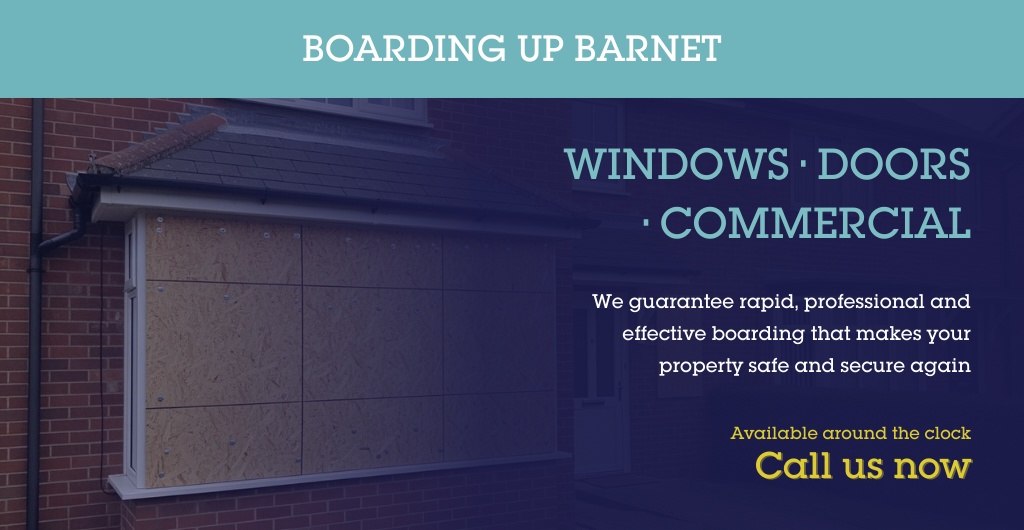
- Windows. Broken or cracked panes are covered with exterior-grade plywood, usually 18mm, cut to size on site. Smaller openings may suit OSB. See our window boarding service for more on how this is done.
- Doors and frames. If a door was forced to gain entry or is too damaged to lock, we secure the doorway. A damaged door or frame may need securing first before boarding goes on. Our door boarding and securing page explains the options.
- Roofs and skylights. Where the roof or a skylight has been opened up, boarding helps reduce weather entering the rooms below. This needs suitable access and is discussed carefully on the call; we cover it on our roof and skylight boarding page.
The van carries boarding stock and fixings. We discuss the openings and access on the call before agreeing the work.
When the frame is badly damaged
Fire weakens timber and uPVC frames. Charred, warped or melted frames may not take fixings reliably. Where we can, we use non-destructive fixing that avoids further damage, and security or anti-tamper fixings where the property will be left empty. If a frame is too far gone to fix to, we’ll explain the options before starting so you’re agreeing to the method, not finding out about it afterwards.
Homes, flats and commercial premises
Fire damaged property securing looks different on a two-storey house, an upper-floor flat or a shop or restaurant on Chipping Barnet’s High Street. Upper floors mean ladders or other access, and a commercial frontage usually means larger openings. Both are worth mentioning when you call, because they affect what’s needed and the quote.
What to tell us on the call
The more we know, the more accurate the quote and planning. Useful details include:
- The postcode, so we can work out arrival time
- Confirmation that the fire service has handed the site back
- How many openings need covering, and roughly how big they are
- Which floors they’re on, and whether there’s clear access to them
- Whether any doors or frames are badly damaged or won’t close
- Whether there’s broken glass or debris near the openings that needs making safe
- Safe photographs, if you can take them, which you can send by email
The quote is given on the call, free and clear, before any work starts. It’s shaped by the number and size of openings, height and access, materials and board thickness, the fixing method, whether a damaged door or frame needs securing first, and any glass or debris to make safe.
Insurance paperwork for fire boarding
Once the property is secured, you’ll receive paperwork that’s useful for your claim:
- An itemised invoice showing the work carried out
- Time-stamped before and after photographs of each secured opening
- A written statement describing the work done
Your insurer decides what’s covered. We’re not loss adjusters or legal advisers, so we can’t tell you how a claim will be handled, but clear records make it easier to show what was damaged and what was done to secure it. Our insurance claims guide covers the documentation in more detail.
What boarding does, and what comes next
Boarding is a make-safe. It protects the property and keeps it secure while you arrange permanent repairs, such as new glazing and doors, through your insurer or your own contractors.
Some things are outside what we do. We don’t carry out smoke or odour remediation, and we don’t replace glazing. If you need those, your insurer or a specialist can usually advise.
Areas we cover
We work across Barnet and the surrounding area, including New Barnet, East Barnet and Arkley. We can also discuss jobs in Whetstone, Totteridge and Cockfosters, subject to confirming your address on the call.
Talk to us about securing your property
Once the fire service has handed the property back, give us a ring. Tell us your postcode, which windows, doors or roof areas are damaged, and roughly how big they are. Safe photographs help us plan access and give you a clear quote before anything starts.